
Biography
Mark Bourne is a Japanese-trained master garden creator and a scholar of Japanese garden history. Mark lived in Kyoto for four years, going through the same rigorous, multi-year discipline that has defined the Japanese tradition for centuries as an apprentice to renowned master gardener Yasuo Kitayama. This training included maintenance, restoration, and new work in many famous and historically significant gardens, including the Kyoto Imperial Palace, Katsura Imperial Villa, Kenninji, Kodaiji, and Daitokuji. In addition to this Japanese training, Mark holds a master’s degree in architectural history, with a thesis based on translations of work related to the Meiji period garden Murin-an. Mark is particularly interested in the delicate balance between innovation and continuity, keeping the tradition vibrant and growing without abandoning the rich history that provides the foundation for practice.


Elements of Design

Soil
Soil is the most powerful element of garden design: rising hills intensify the mountainous presence of boulders, banks are deliberately built up to make pathways feel intimate and secluded, even flat ground is carefully crafted to offer a restful expanse.

Stone
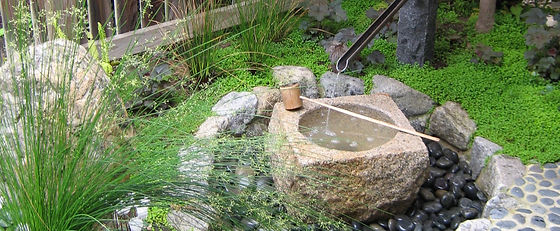
Natural boulders, stone paths, and garden walls – stone is unchanging yet dynamic, capturing energy and motion in rich textures and endless complexity. Stone is the enigma at the heart of creating gardens.

Plants
A pine branch pruned to evoke the timeless endurance of life, flowers emerging to capture the fleeting beauty of the passing seasons, woody branches juxtaposed with delicate foliage. Plants complete the poetic composition of the garden.
Process
Windsmith Design provides integrated garden design and construction, focused on creating landscapes that invite and evoke emotions. Serene, restorative gardens intended to capture the feeling of nature are a prime example of this, but our emotional lives can be so much more abundant: invigorating, delightful, enticing; even emotions that we are not entirely able to put into words, like the first flowers of spring brightening a familiar vista as we walk through the garden, or the last color as autumn fades.
This inward intent guides the creative process from the first meeting to the final walk-through, but the process of achieving these goals is driven by practical concerns.
Each project begins with a simple design phase focused on determining the scope, scale, and key features that will be included, and understanding the types of garden spaces the clients find most appealing. This design provides enough detail to determine construction costs and guide the location of garden features, but allows room to refine features as the garden takes shape.
The work of actually building gardens is first and foremost a matter of craft. If gardens are poetry, they are material poetry, and the details of site mechanics and material conditions are the vocabulary of expression. That perfect vista emerges from the “just-so” curve of the path, patterns that are irregular but not random, carefree but not careless. As the owner of Windsmith Design, Mark has spent decades cultivating the technical skill needed to express these ideas.
The heart is poetry, but the hands are pragmatic.